
by Andrey Ryanskiy
Dahab has been my home base for diving for many years, and one thing I love about it is how much marine life you can find almost without leaving town. The bay is framed by cafés, restaurants, and the promenade – but take a few fin kicks off the shore, and you enter a different world entirely.
The Red Sea gives Dahab an incredible mix of habitats: seagrass meadows, sandy slopes, dramatic walls, and long, quiet stretches of reef. Because of this variety, many unusual species are surprisingly easy to find here — including fish that are rare or regional endemics.
Below are ten species I always recommend to divers visiting Dahab for the first time. All of them can be seen regularly and a few of them have given me truly memorable encounters.
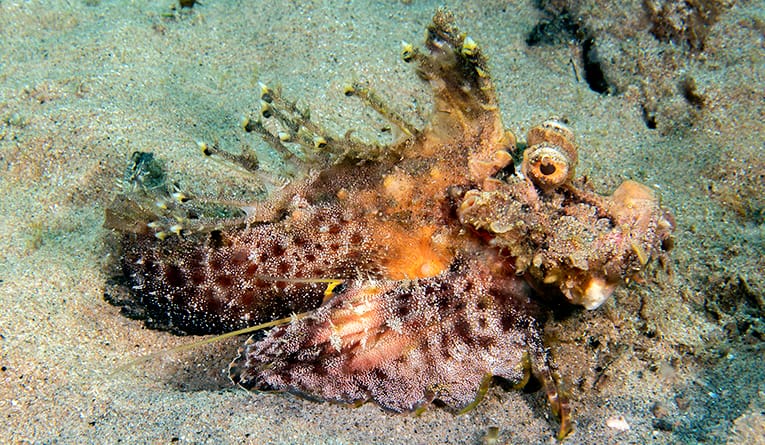
1. Filamentous Devilfish
The first time I saw this species outside Dahab, my dive guide was delighted – he thought we’d found something very rare. I had to admit that in Dahab I see it so often that I sometimes swim by without a second glance.
A venomous member of the stonefish family, it’s most common at Mashraba (Scuba Seekers’ house reef), though it turns up at several other local sites.
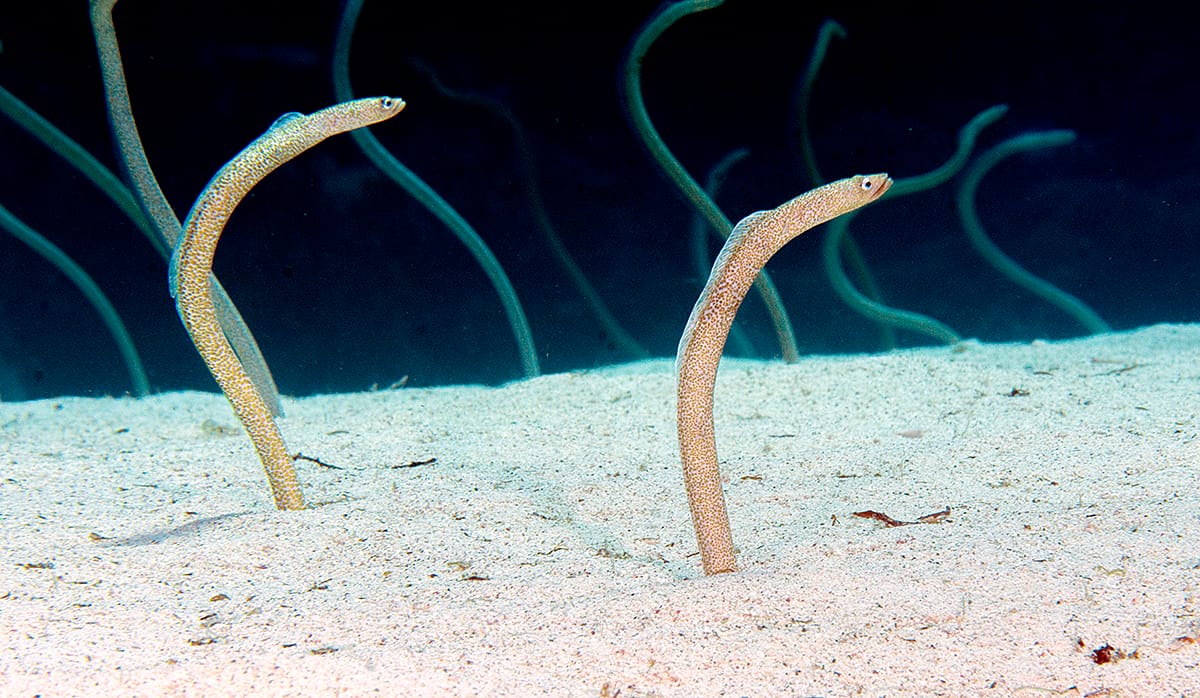 2. Red Sea Garden Eel
One of my favorite sights in Dahab: a whole meadow of garden eels swaying in the current. If you keep your distance and stay patient, you can watch them feed, argue with neighbors, and occasionally bold individuals will rise surprisingly high above the sand.
Eel Garden and Um Sid are the best places to enjoy this underwater “field”.
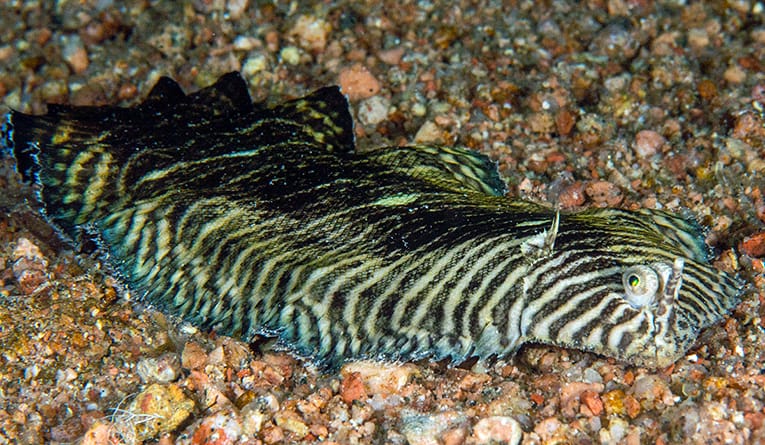
3. Dor’s Sole
If you start a night dive at Lighthouse, keep an eye out right at the entry. I’ve met Dor’s Sole countless times here – usually half-buried, with only its little breathing tube sticking out of the sand.
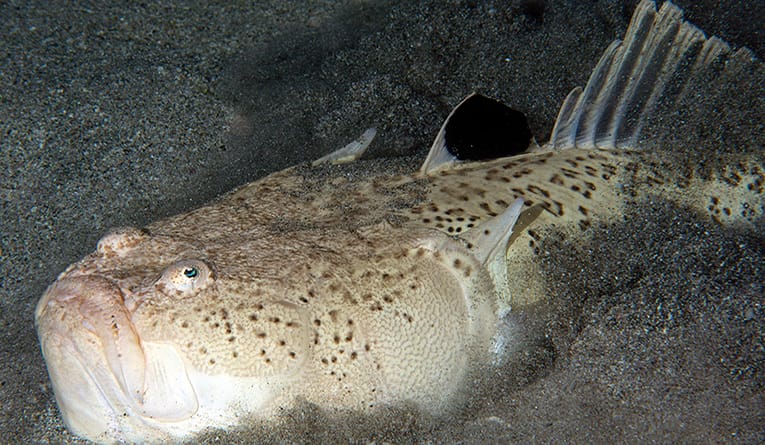
4. Rosette-Spotted Stargazer
This is a fish that rewards divers who move slowly. On many evening dives at Lighthouse and Mashraba, I’ve noticed just the faint outline of eyes and a mouth waiting patiently for prey. Once you learn to spot them, you’ll see them more often than you expect.
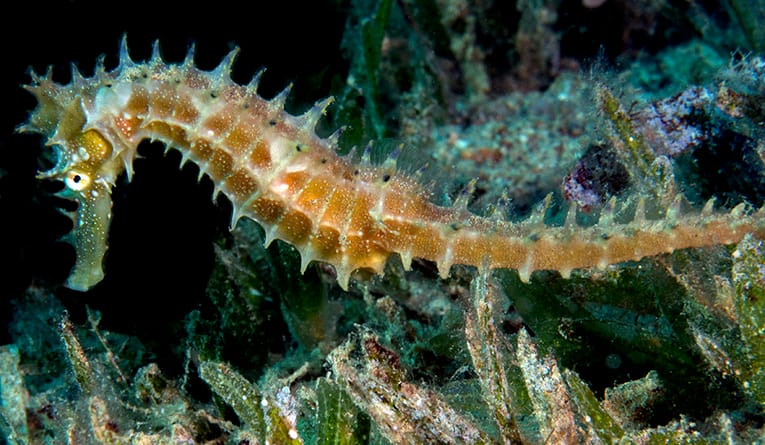
5. Jayakar’s Seahorse
The seagrass beds around Mashraba are a treasure, and this seahorse is one of their most charming residents. I’ve photographed it here many times – usually the yellow-brown variety with white dots and spines along the back.
It occasionally appears at other sites, but Mashraba remains the most reliable.
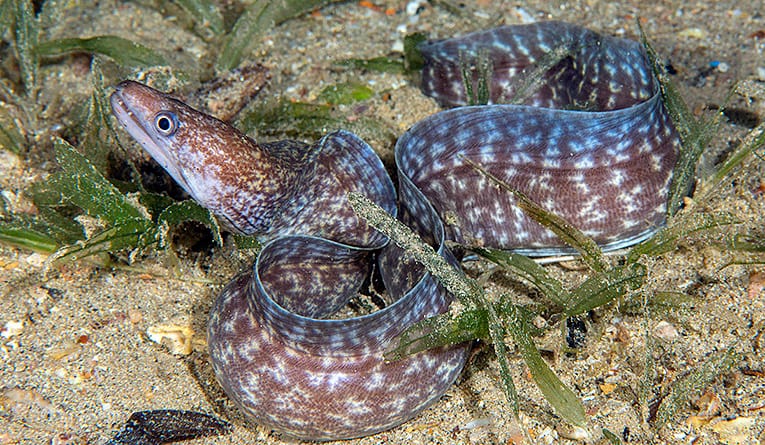
6. Pharaoh’s Moray
This species was only formally described in 2019, but Dahab has turned out to be an excellent place to meet it. During night dives between Bannerfish Bay and Lighthouse, I’ve often seen them gliding over sand and seagrass.
A great example of how much the Red Sea still hides in plain sight.
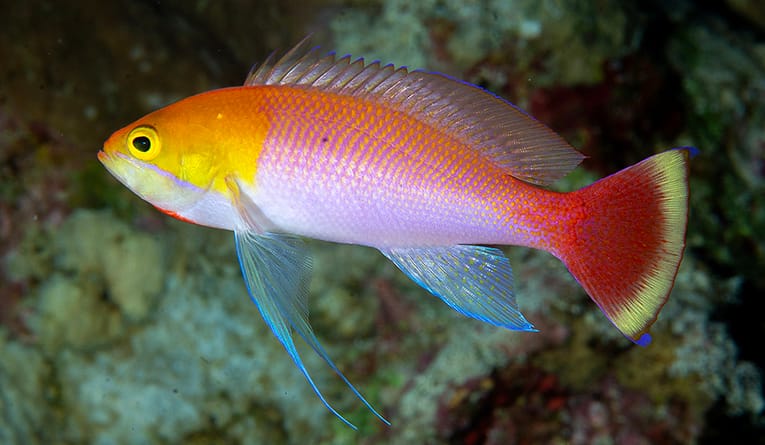
7. Orangehead Anthias
These beautiful Red Sea endemics prefer deeper walls. The outer drop-off of the Blue Hole remains, in my experience, the best place to see the males patrolling their harems. Occasionally, I spot them at the deeper parts of Lighthouse — but only if the conditions are perfect.
Always check that your training and gases allow for this depth; it’s worth doing it safely.
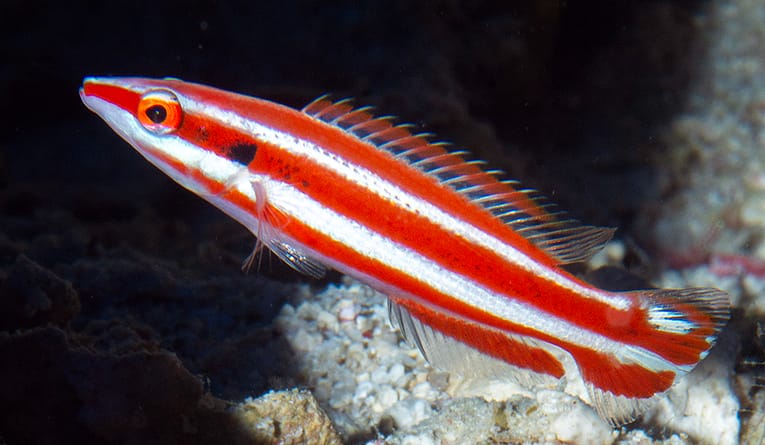
8. Red-striped Hogfish
This species always makes me smile. If I stop near a group of Orangehead Anthias at 30–35 meters, I can almost guarantee that a curious hogfish will appear sooner or later to check what I’m doing.
A very inquisitive fish – and a great one for photographers.
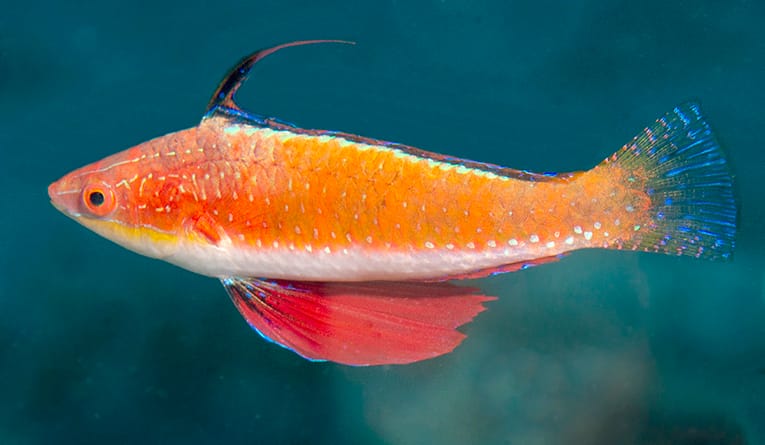
9. Social Fairy Wrasse
Another gift from Dahab’s seagrass areas. This species is seasonal: sometimes the males gather whole groups of females, and sometimes I can spend days without seeing even one.
Like other flashers, they display late in the afternoon – I’ve spent many sunsets watching their quick bursts of color.
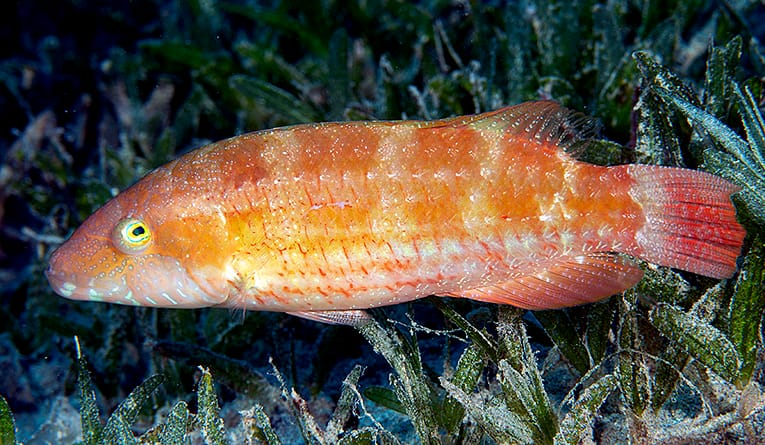
10. Oriental Wrasse
A widespread Indo-Pacific species, but oddly hard to find in many places. In Dahab, however, it’s a regular sight. Mashraba’s seagrass beds are, in my experience, the easiest spot in the entire Red Sea to see this fish consistently.
Final Thoughts
Dahab rewards curiosity. You don’t need a boat or long dives – just a slow pace, good buoyancy, and the willingness to look closely. Whether you’re hunting for rare species or simply enjoying the small details of the reef, Dahab’s bay offers more than most divers expect.
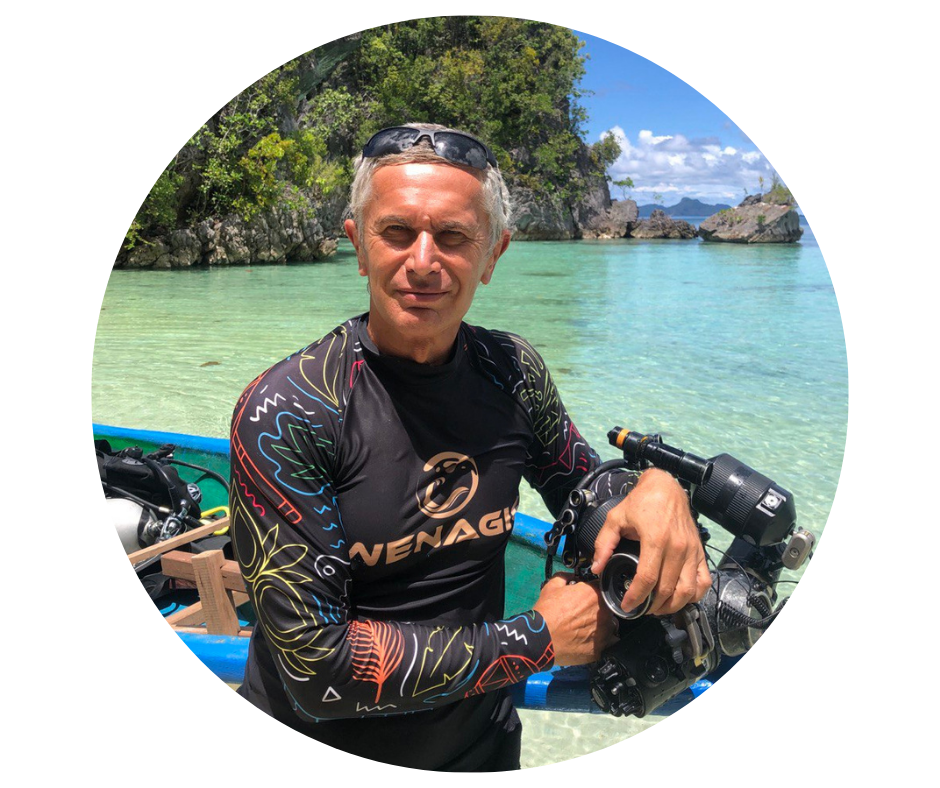
Andrey Ryanskiy is a naturalist, citizen scientist, long-time friend of Scuba Seekers, and an expert underwater photographer. With top-level certifications (Divemaster, TDI Advanced Trimix, Full Cave since 2005), he has spent the last two decades exploring the oceans with a camera always in hand.
He has completed more than 6,500 dives across the Indo-Pacific — from the Red Sea and Maldives to Indonesia, Papua New Guinea, and New Caledonia — documenting marine life as a way to promote ocean awareness and education.
During his travels and biological expeditions, Andrey built an exceptional photographic archive of around 8,000 species from the Indo-Pacific. Today he publishes field photo guides on marine life and continues to share his discoveries with the global diving community.