By Katherine Lewis
If you ask most people about wreck dives in the Northern Red Sea, the Thistlegorm is top of the list. But in what I suspect is an unpopular opinion among many wreck-enthusiasts, I don’t think it’s the best the Red Sea has to offer.
The Thistlegorm is iconic, yes. But often I find it overcrowded and, because it’s so well dived and a little deeper, there isn’t as much coral growth as on some of the Red Sea’s other wrecks. Personally, I prefer the Chrisoula K – also known as the Tile Wreck – which sits alongside three other wrecks on Abu Nuhas reef.
I first dived here in 2008 on my first Red Sea liveaboard and I remember thinking at the time how much I preferred it to all the other wrecks we saw that week, the Thistlegorm included.
I recently got to revisit the Chrisoula K on a trip with the MV Legends II and I was intrigued to see if it was as beautiful as I remembered.
We were exceptionally lucky with conditions and were able to moor on the wreck itself because the sea was so calm. The wreck looked magical from the surface. We could see the stacks of tiles covered in corals, as well as the multitude of fish, from the dive deck. I wasn’t disappointed in what I found when I sank beneath the surface. So, here are three reasons why the Chrisoula K is still my favourite Red Sea wreck…
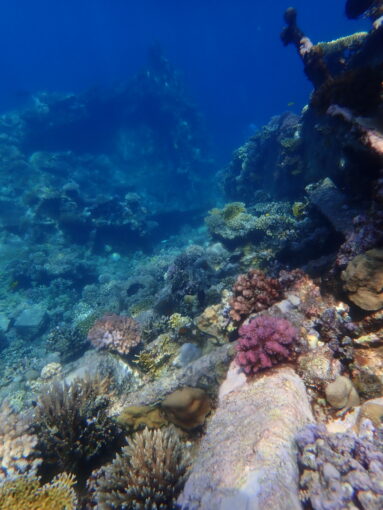
Firstly, it is covered in coral growth having been underwater since 1981. The structure is still visible, but in places it looks like an extension of the reef it hit, rather than a standalone shipwreck. I love seeing nature claim remnants of the human world and make them more beautiful than they ever were above water.
In the shallowest parts of the wreck, which are less than 2m below the surface, it is hard to distinguish where the reef ends and the wreck begins.
Secondly, the cargo hold of the Chrisoula K, with just its beams remaining, is one of the most beautiful wreck swim-throughs I’ve had the pleasure of doing. The light streaming in and catching the coral-covered blocks of tiles is stunning.
It’s an easy wreck penetration, so if you haven’t done much wreck diving before, it’s a great place to start getting used to being inside a structure. There are no twists or turns, just a straight passageway with a clear exit and beautiful views all the way along.
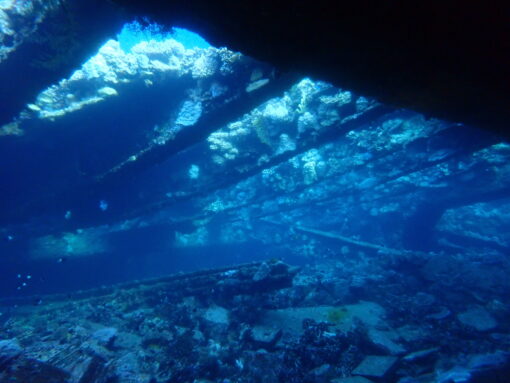
Even though it’s an overhead environment, because it’s so open on one side, you don’t really need a torch here. You can float along and enjoy watching the multitude of fish as they flit in and out of the cargo hold.
There is also a second opportunity to go inside the wreck, where you can see the drill and lathe that were part of the ship’s equipment still in place. This section of the wreck is darker, so you’ll want a torch. It’s pretty cool to see such recognisable tools being gradually reclaimed by the sea.
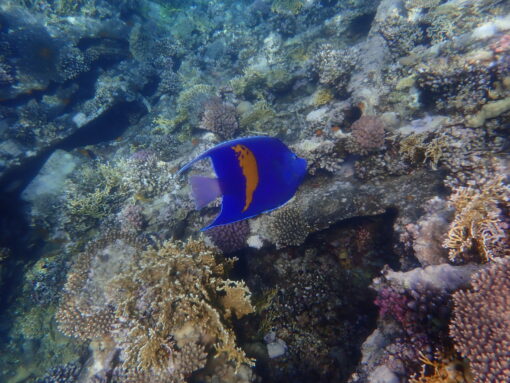
Finally, the variety of marine life on and around this wreck is what I probably love the most about the Chrisoula K – although I will add that this comes from someone who dives wrecks for what lives on them, rather than for the metal. There are clouds of anthias, damselfish and sergeant fish around and inside the wreck. Curious batfish and inquisitive wrasse often take a close look at divers. Vibrant Sohal surgeonfish and Arabian angelfish also make an appearance as you explore.
If you’ve got an eye for macro, chances are you’ll spot a nudibranch or flatworm somewhere on the wreck. Long-arm cleaner shrimp dance among anemones and Christmas tree worms unfurl their spiral-like radioles to feed and breathe.
This combination of coral growth, marine life and an interesting wreck structure is what makes the Chrisoula K my favourite Red Sea wreck dive.

Kat Lewis: Kat has been diving for over 20 years, starting out in the cold but beautiful waters of the UK and expanding her horizons to dive all over the world. She’s passionate about ocean conservation and loves spending time underwater observing the fascinating creatures that inhabit our oceans.
You can follow Kat’s underwater adventures on her Substack blog:
Kat of The Ocean as well as on Instagram: @katoftheocean