by Christina Ewerhardy
When I first arrived in Dahab and began diving in the Red Sea, I was a freshly graduated biologist with just 20 dives under my belt and an Advanced Diver certification in my logbook. I was still a baby diver: wide-eyed, curious, and completely captivated by the underwater world. Every dive was a new chapter in a story I was just beginning to discover.
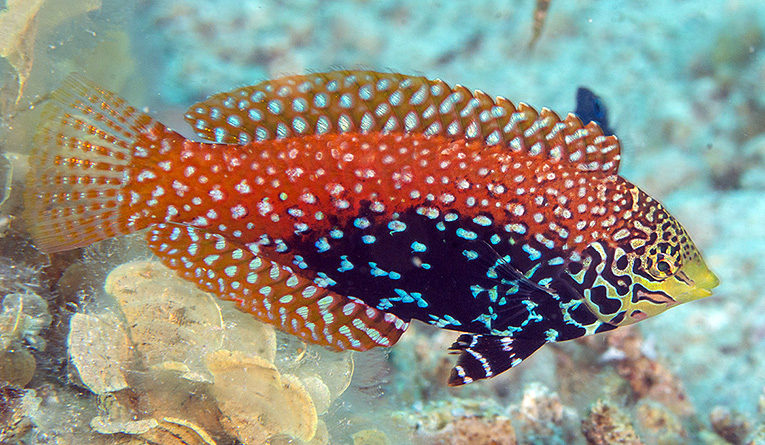
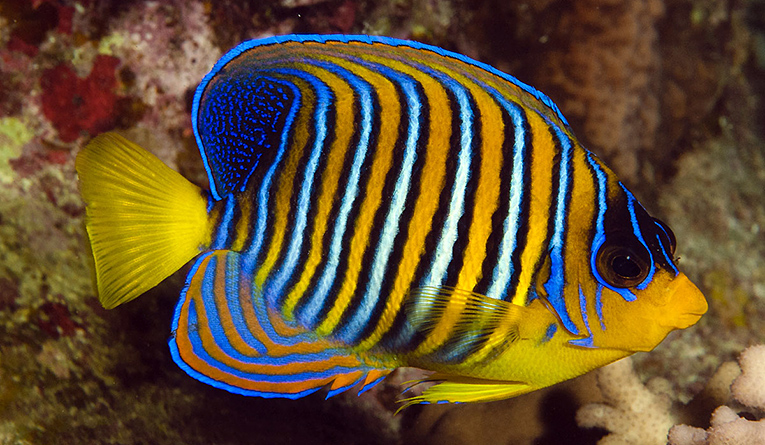
I wasn’t only captivated by the beauty, however. I needed to know these fish – their names, their behaviors, their roles in the reef, and their fascinating evolution through the course of their lives. That’s when fish identification became more than a skill. It fundamentally changed the way I looked at each underwater scene – with observations, questions, and understanding, instead of just with a cursory look, like a passerby…
What Are Fish Surveys – and Why Do They Matter?
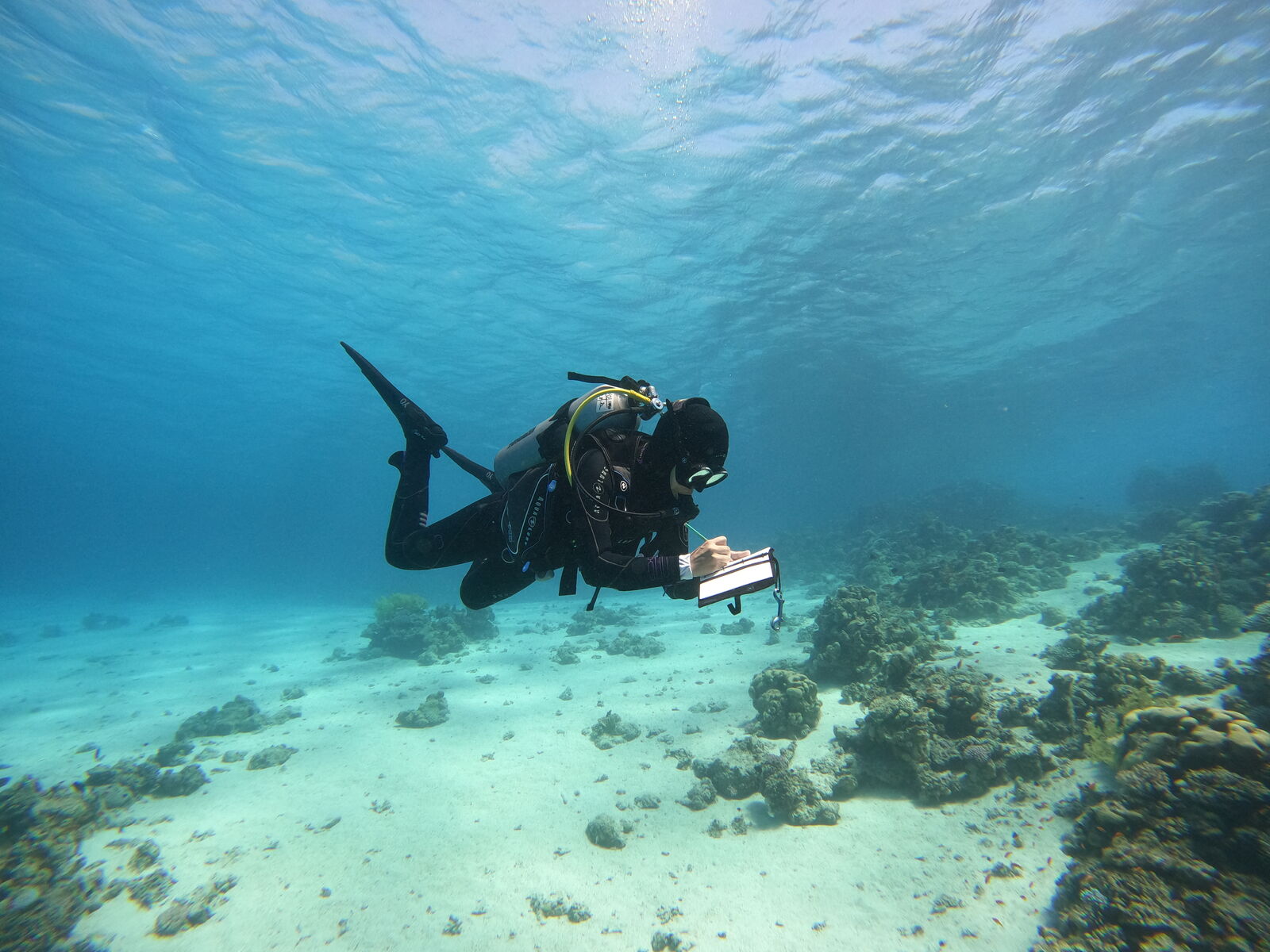
At Scuba Seekers, I run a dedicated Fish Survey Program that trains divers to become citizen scientists. Through structured surveys and guided training, participants learn to identify local reef fish and contribute valuable data to global conservation efforts.
This isn’t just a checklist exercise. It’s a way to:
- Track biodiversity and detect changes in fish populations over time
- Spot invasive species before they become a threat
- Support marine protected areas with real-time ecological data
Our program is inspired by global initiatives like REEF’s Volunteer Fish Survey Project, but tailored to the unique biodiversity of the northern Red Sea. Data submitted to REEF goes through a series of computer and human error-checks, after which it is loaded into REEF’s online database, which is open-source and available to scientists and related professionals and institutions to use for further research, policy advocacy, and change.
From this database, a variety of reports can be generated on species distribution and population trends, for specific reefs or larger geographical regions. Importantly, the data is being used by NOAA, the University of Miami, the State of Florida, the governments of the Caribbean and Bahamas, and The Nature Conservancy for research, marine park management, and more.
The Personal Impact of Fish ID
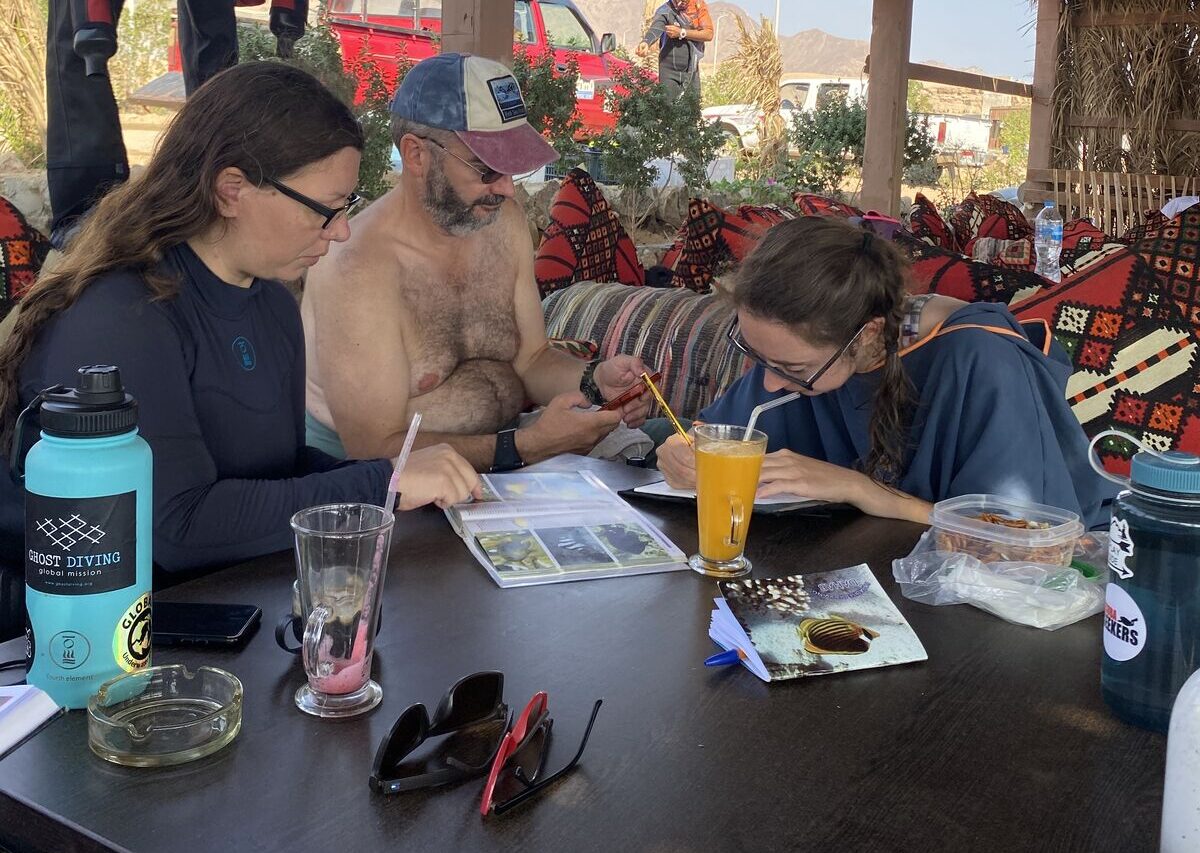
Learning fish ID changed the way I dive – and the way I teach. With the help of a brilliant mentor (and some unforgettable mnemonics), I quickly built a mental library of species. Six years later, I still use those same memory tricks; but now I pass them onto my own students.
After completing the first level of the Fish Survey Program, I’ve seen the following changes in my students:
- Divers become more observant. Suddenly, every dive is a treasure hunt.
- They connect deeper with the ecosystem. Recognizing species leads to understanding behaviors, interactions, and reef dynamics.
- They become advocates. Once you know what’s at stake, you can’t help but care and act.
Still Learning, Still Surveying
When I’m not managing the operations of Scuba Seekers or teaching, you will often find me accompanying one of my favorite dive buddies while she films marine life. If you’ve ever been diving with a macro-enthusiast with a camera, you’ll know, they don’t move much. So while she spends 45 minutes trying to capture microscopic critters before moving on to the next spot, I have enough time to conduct a fish survey.
I am not mandated or obligated to do this – conducting fish surveys gives me joy. Even after all these years, I still find species on our house reef that I haven’t fully described or identified. It’s both humbling and thrilling. I make it a goal to spot one or two new ones every time I dive.
The diversity right on our doorstep is just incredible. I often find myself completely absorbed in my wetnotes, scribbling down species names, estimating abundance categories, and trying to capture the reef’s complexity in real time.
From Local Action to Global Impact
The data we collect at Scuba Seekers feeds into broader conservation networks. It helps scientists, policymakers, and NGOs make informed decisions about reef protection. But just as importantly, it builds a community of ocean stewards; people who dive with awareness and purpose.
Whether you’re a seasoned diver or just starting out, joining a fish survey is one of the most rewarding ways to deepen your connection to the ocean. At Scuba Seekers, we don’t just teach fish ID – we teach you how to see the reef.
Christina holds a Master’s degree in Biodiversity, Ecology and Evolution from the University of Göttingen. Her first dive took place in 2009 in the waters off Elba Island, Italy – a tentative step to explore whether she might pursue Marine Biology. That dream was set aside for a time, only to resurface after graduation when she arrived in Dahab to work briefly with the Red Sea Environmental Centre. The Red Sea quickly captured her heart, and she chose to leave academia behind, moving permanently to Dahab. There she became a dive instructor, and today she serves as Operations Manager and Head of Conservation at Scuba Seekers, leading projects that unite her scientific training with her passion for the ocean.