by Maria Ordovas-Montanes
I saw a fish with a shrew-like snout out of the corner of my mask. I turned to get a closer look but it darted away behind corals before I could notice any more details. I wanted to call the attention of my buddy to ask if he had seen it too, but I didn’t know how to communicate “what is that mystery fish?” with only hand signals.
When I tried describing this fish to others, they suggested cornetfishes and pipefishes but I had already ruled those out – I was pretty sure the mystery fish was in another family.
A few dives later, I saw the mystery fish again at The Islands and made sure to keep some details in my head for the rest of my dive and the ride back to the dive centre. I paged through the coral reef reference books but couldn’t find a shrew-like fish with a dark upper body and yellow tail.
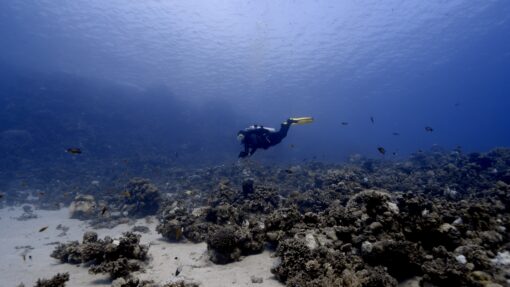
On another dive, I saw a fish with the same body shape and movement – but this time it was blue-green with some brighter highlights on the dorsal fin. I revisited the reference books and found it in Collin’s Coral Reef Guide, Red Sea: the Indian bird wrasse. Females and males are coloured differently, which is why I had trouble identifying them at first. I felt the satisfaction of my ongoing detective work, and I knew I wanted to do more of this.
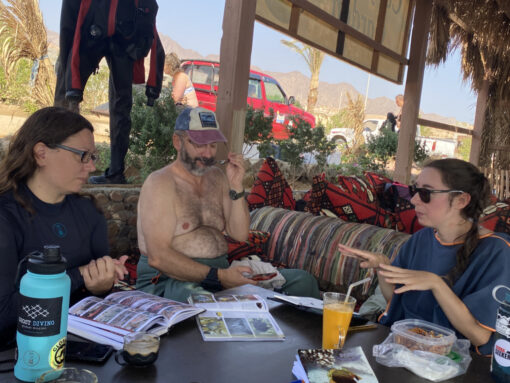
I spoke to Christina, the Head of Conservation at Scuba Seekers, who recommended the Fish Surveying Program run by the Reef Environmental Education Foundation (REEF). A few days later, I was in the classroom studying fin shapes, mouth types, and behavioural characteristics.
I learned new hand signals to refer to fish families and some of the species. In the first dive of the course I was pointing to threadfin butterflyfish while making a needle and thread motion along my wetsuit seam, and when Christina pointed to a different kind of butterflyfish, I pretended to put a crown on my head to indicate the crown butterflyfish. I loved being able to communicate down to the species level, where previously I would just point and hope my buddy looked at the intended fish.
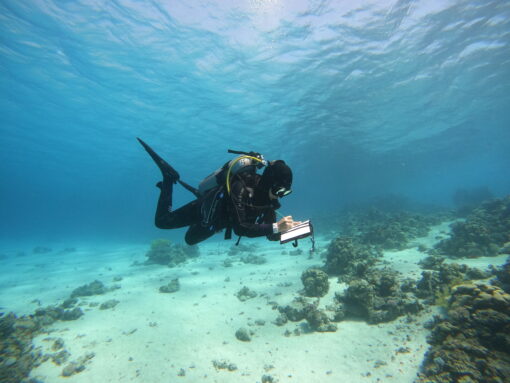
The more families I learned, the harder it was to keep track of the dozens of fish we were describing and identifying on each dive. I filled up two slates on a morning dive in Mashraba and during our surface interval, my dive buddy gifted me wetnotes!
That afternoon, I sketched out fish outlines and scribbled details about stripes and fin colours, all while hovering above the reef. With these notes, Christina and I debriefed: discussing fish family patterns, disentangling similar-looking species, and checking whether we had spotted any juveniles.
Over the classroom presentations and six dives, I learned 89 species across 11 families. I also practiced maintaining buoyancy control while observing fish and taking notes. After getting more familiar with the species that kept appearing, fish spotting and identification felt like a fun game. I am now better able to appreciate the Red Sea fish around me: both the common species and new-to-me species. The Fish Surveying Program helped me recognize patterns of mystery species well enough to consult a guide, or describe them to Christina.
In my final dive of November, I returned to the centre telling Christina that I had seen a large fish at the base of the elephant sculpture at The Lighthouse. It looked like a combination of a butterflyfish (colour-wise) and angelfish (shape-wise), but with very long fins. Christina knew we hadn’t covered this family yet (that’s in the advanced course, which is on my list!) and helped me find it in the reef guide: it was a spadefish. While I was sad to leave Dahab and the Red Sea life this past month, I am confident that the identification skills I’ve learned will be useful the next chance I get to dive.
If you are interested in conservation, underwater photography, or you want to feel more knowledgeable on your dives, you can learn more about the course by following this link.
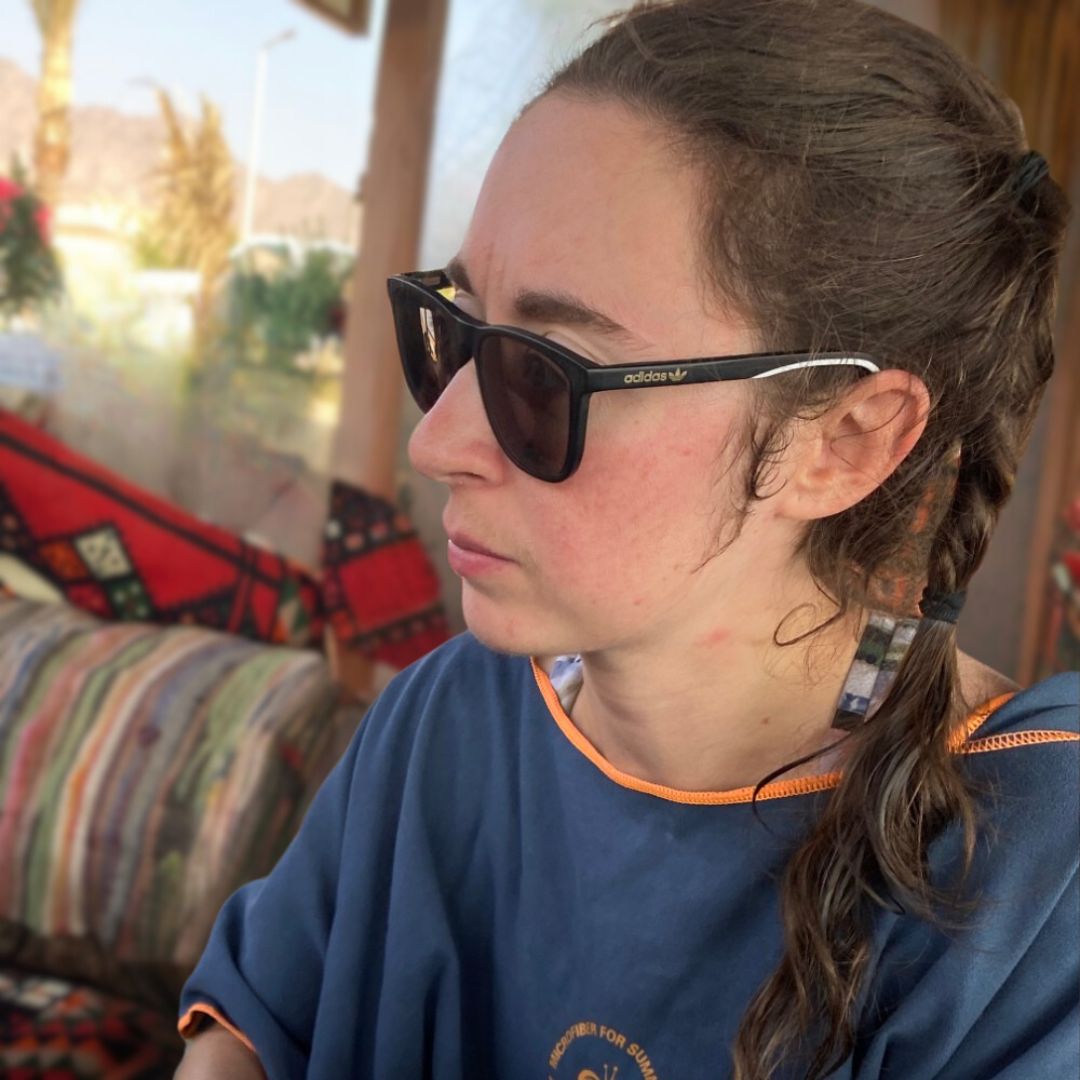
Maria Ordovas-Montanes took her first underwater breath in October 2025 and filled her Dahab logbook within two months. After studying biology in the lecture halls and labs of Tufts University and the University of Oxford, she has enjoyed being immersed in the Red Sea with such diverse marine life.