
By Rasaalika Singhania
In one sentence: Comfort is everything – and you must stretch. But here’s some context if you are facing (or have faced) similar struggles.
When I first started diving a drysuit, I felt like I had been born out of a drysuit neck seal and was made for it. Then, as I began to overthink it, Did I have too much gas in the suit? Too little? Was I doing this, that, and the other correctly?, I started having problems.
When I get it right (I’d say about 80% of the time at this stage), diving a drysuit feels like I’m hanging in a trilaminate cradle – with effortless trim and comfort, and complete (and I do mean complete) control over every minute adjustment I intend to make in the water. On those dives, I could happily execute a 10-hour dive (I imagine my longest so far has been just shy of five hours).
But when I don’t, I hate the dive I’m on. I hate being in the water at that time and will do everything I can to get out of the water as quickly as possible. As many can relate, it is extremely frustrating. You leave the water questioning everything and sometimes hating your drysuit.
Don’t give up yet!
I’ve had a few interesting and insightful conversations with Scuba Seekers customers (who are now friends) and with dive friends across the world. Together, we’ve troubleshooted their issues, and here is a summary of what I’ve learnt.
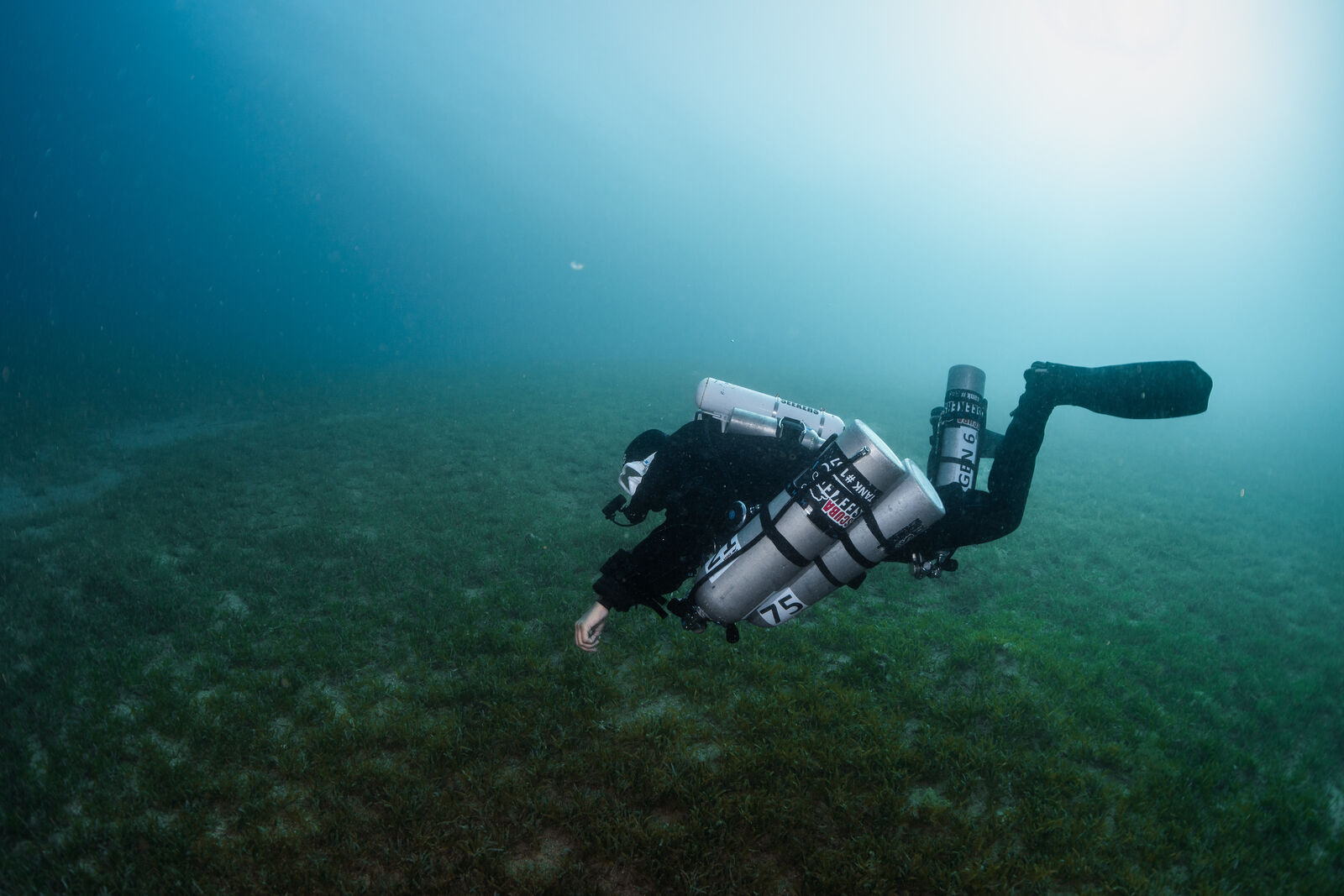 1. Comfort is Everything
- If you can get yourself a made-to-measure drysuit, do it. An ill-fitting drysuit will never give you that feeling of “I could do this for 10 more hours,” especially if your goal is long, decompression dives, where comfort is non-negotiable as you hang at 3–6m for hours – often without a decompression trapeze or habitat.
- Skip the slim fit. While we all love to look good underwater, a slim fit will restrict your ability to change up undergarments as you learn, grow, gain weight, and dive in environments that demand more layers and systems.
- Try out different undergarments. What works for someone else may not work for you. For example, if I am diving with the Avatar 901 undersuit, I need something slippery underneath and cannot use my beloved k01 base layer — I can only use my Under Armour activewear, which is smooth and doesn’t cause friction with the warm fleece lining of the Avatar.
My go-to combo is the k01 merino base layer with the Santi Flex190 for winters in Egypt, and just the k01 base layer for all other seasons, with the Fourth Element X-Core vest as an add-on for those longer filming or decompression dives.
This isn’t gospel; it’s just what works for me.
 2. You Must Stretch!
Having an entry process is important – whether it’s from shore or off a boat. At the surface, I close my dump valve all the way, fill up my drysuit with gas, and stretch my body in every direction – especially around my hips, knees, and legs. When I’m done, I open up the dump valve and let all the gas out, and I’m ready to dive.
This is important because if your undergarments are crinkled or obstructed in any way, gas won’t move as it should through the suit and will accumulate or get stuck in certain places. For me, this results in feeling like I don’t have control over my legs — which is simply not an option.
When I’m filming macro life and hovering inches above the substrate – and definitely not putting my camera rig on the substrate – I use very small backward-kicking movements, often with just one fin, to adjust my position and capture the movements and intricate details of small, moving creatures.
When I’m filming my mentor Sameh Sokar (who doesn’t move and is my role model for stability, amongst other diving-related things), I need complete control of my legs.
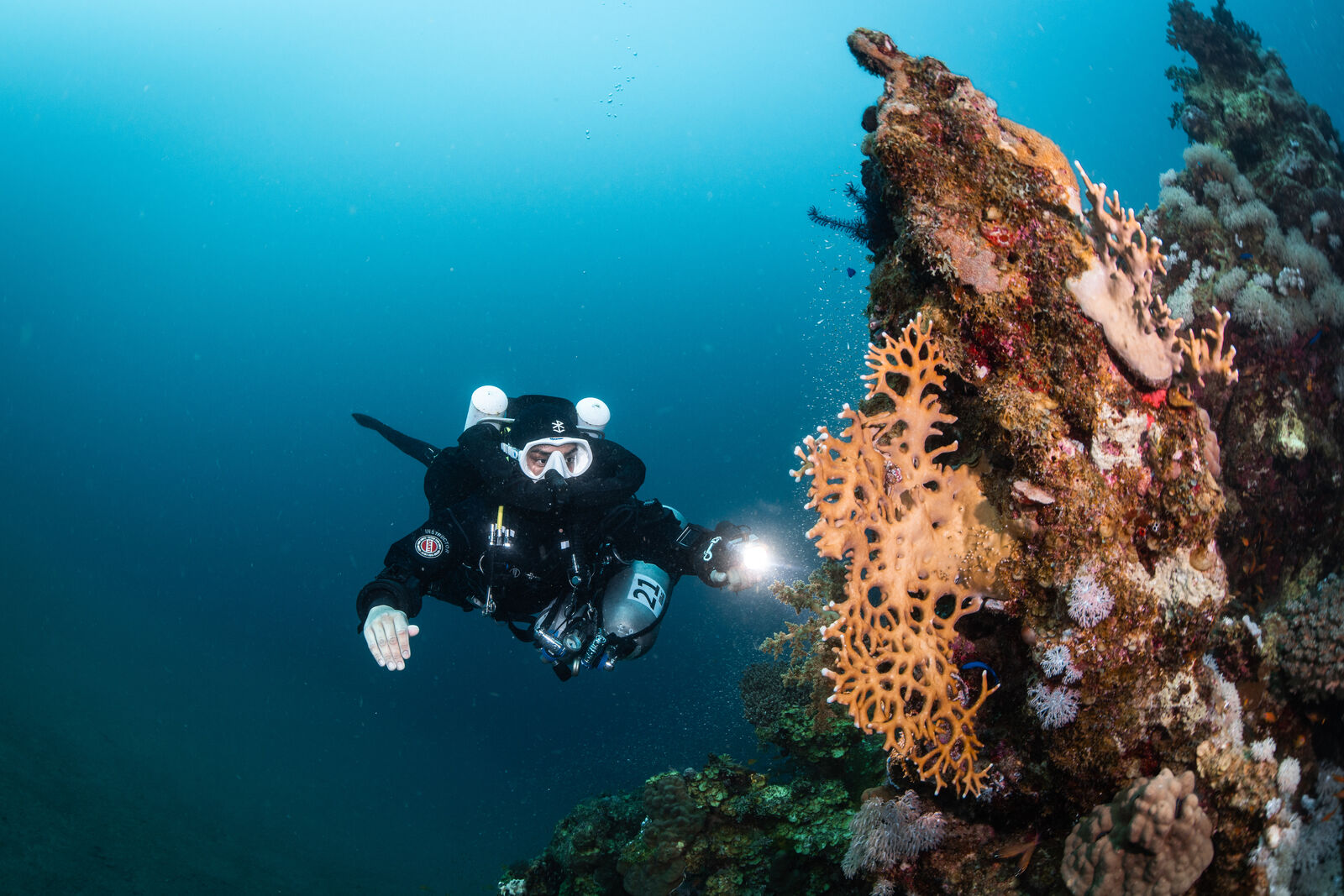
I have, of course, completed dives while uncomfortable and am experienced enough to manage these situations when they arise. But that discomfort is enough to suck the joy out of the dive in question.
All of us at Scuba Seekers have different methods of stretching. There is no “right way” in my humble opinion. You just need to work towards the goal of having complete mobility — and you will feel whether or not your stretching worked from the moment you descend and begin your dive (it’s an amazing feeling, trust me).
If you thought you stretched sufficiently but discovered underwater that you didn’t, it is possible to course-correct (a little) underwater by dumping gas from your wing, adding to your drysuit, and attempting to stretch out the area that’s uncomfortable. However, please only do this under the supervision of a buddy to maintain your depth and mitigate risks (such as an uncontrolled ascent). Do not do this for the first time on a high-consequence dive. Like with all things new in diving – go practice in shallow water with a trusted buddy or under the supervision of an instructor.
Drysuit diving has changed my diving life – and it isn’t only about warmth. I refuse to dive severely overweighted in a wetsuit and a rebreather. And given that I can count the number of open-circuit dives I’ve done in the last 12 months on two hands, I dive my drysuit year-round.
I hope these tips and tricks convince you to stick with your drysuit and find ways to troubleshoot any issues you may be facing. For anything else, come visit us at Scuba Seekers. I guarantee you each of us has had our own journey with drysuits and can guide you through getting to know your suit and what works best for you.

Rasaalika spent over thirteen years in strategy, investment banking, and asset management for the impact investing sector prior to her first dive in the low-visibility waters of Singapore. Like many others, she was captivated by every aspect of the ocean and all its wonders. She gave up corporate life and dove into the ocean full-time, diving across nine countries—with the sharks of the Maldives and in the frigid waters of Lake Huron—before landing in Dahab and falling in love with technical and CCR diving. She is now a key member of Scuba Seekers’ marketing team, Program Manager for Scuba Seekers x Healthy Seas, and Scuba Seekers’ resident underwater camerawoman, and is a rEvo Hypoxic Trimix 100m diver with over 350 hours of rebreather experience.
You can follow her adventures on instagram: @ras.underwater